
Crisis Skills
Use these skills to quell panic and distress FAST
Dr Al explains these skills for you
Lesson 5 of our online course is called Anger Skills and Pills. Dr Al explains how to use these skills to manage panic and anger episodes. You can watch a free preview of the course to see if it's for you.
Listen to Dr Al Explain these skillsFast, Practical Tools to Stop Escalation Before It Costs You
When distress spikes fast, you don’t need insight.
You need control.
These three crisis skills are designed for moments when:
-
your nervous system is escalating rapidly
-
your thinking is narrowing
-
you’re close to doing or saying something you’ll regret
They are not about “calming down” in a vague way.
They are about bringing your physiology back under control quickly so you can function.
These are the top three crisis skills we teach because they:
-
work on the body first (not willpower)
-
can be used anywhere
-
act fast
-
reduce risk
Tactical Breathing
Use this when panic, hyperventilation, or mental overload hits
What it’s for
Tactical breathing is your first-line tool when:
-
your breathing is fast or shallow
-
you feel panicky, dizzy, lightheaded, or “not quite with it”
-
your thoughts are racing
-
you’re escalating in public, at work, or somewhere you can’t leave
This is the fastest way to interrupt hyperventilation-driven panic.
When you’re distressed, you blow off too much carbon dioxide. That chemistry shift alone can drive panic, confusion, and loss of concentration. Tactical breathing fixes that without needing equipment or privacy.
Why it works (briefly)
-
Slows breathing rate dramatically
-
Retains carbon dioxide
-
Reduces physiological panic signals
-
Restores concentration and decision-making
You can do this sitting at a table, on a bus, in a briefing room, or in the middle of a conversation.
How to do Tactical Breathing
-
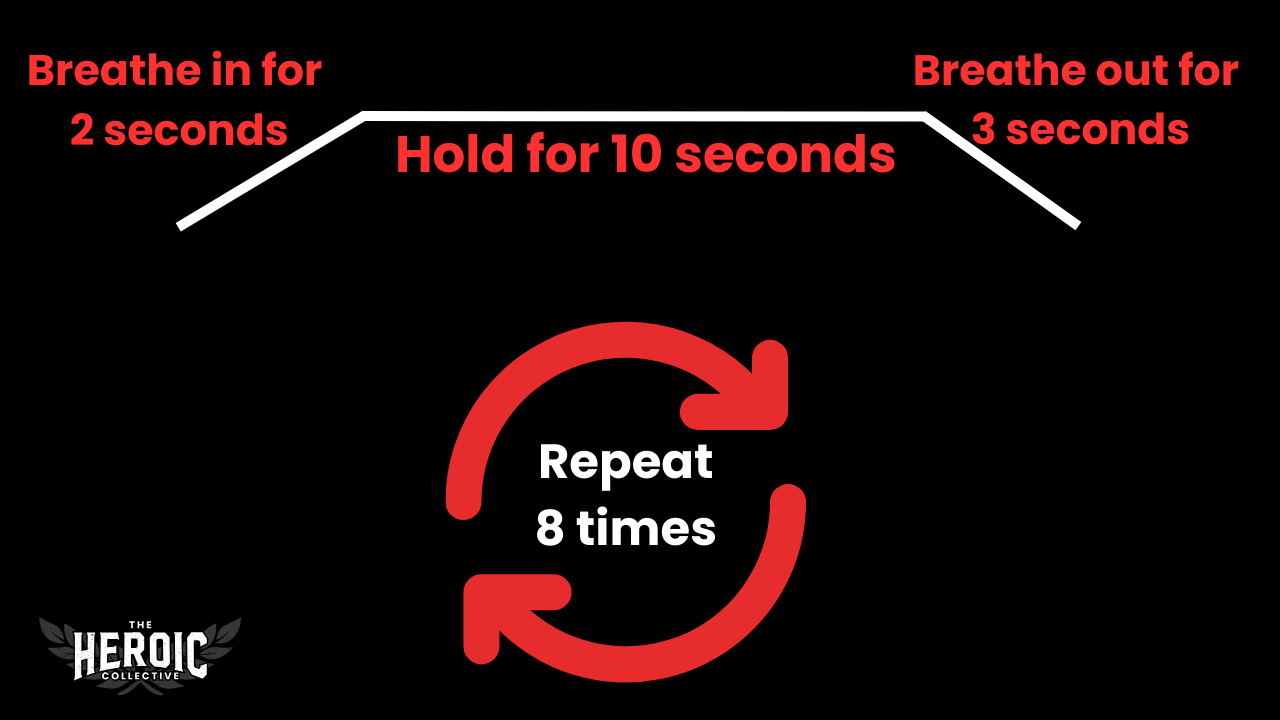
Breathe in normally for 2 seconds
(Not a big breath. Just normal.) -
Hold your breath for up to 10 seconds
-
If you can’t reach 10 at first, that’s fine
-
Aim for gradual improvement over a few cycles
-
-
Breathe out for 3 seconds
That’s one cycle.
This gives you a 15-second breathing cycle, which drops breathing rate to about 4 breaths per minute.
How long to use it
-
Aim for 6–8 cycles
-
If still elevated, keep going for another 1–2 minutes
-
You can stop once concentration returns and breathing settles
If you’re coaching yourself internally, count slowly in your head.
If someone else is helping you, a calm, direct voice works best.
When to use Tactical Breathing
-
Panic attacks
-
On-shift escalation
-
Acute anxiety
-
Feeling dizzy or lightheaded
-
When you can’t leave the situation
-
As a first step before any other skill
This is often enough on its own to bring distress back into a manageable range.
Burst Exercise
Use this when your body needs to burn off activation fast
What it’s for
Burst exercise is for moments when:
-
your body feels charged, restless, or explosive
-
breathing alone isn’t cutting it
-
anger or agitation is building
-
you feel like you need to move now
This is not about fitness.
It’s about rapidly reducing physiological arousal.
When distress is high, your muscles are primed for action. If you don’t use them, that activation has nowhere to go — and it leaks out as agitation, anger, or impulsive behaviour.
Why it works
-
Large muscles produce carbon dioxide
-
Physical exertion discharges excess stress hormones
-
The nervous system gets the message: “action completed”
This is one of the most reliable ways to cut through high arousal quickly.
How to use Burst Exercise
Pick something simple and available. The rule is:
If you were calm right now, what would make you huff and puff?
Examples:
-
Fast stair climbing
-
Star jumps
-
Burpees
-
Skipping
-
Push-ups
-
Sprinting
-
Stationary bike
-
Bodyweight squats
Do it hard and fast for:
-
30 seconds to 2 minutes
-
Stop when breathing is heavy
You don’t need to exhaust yourself. You just need to activate the muscles enough to shift the chemistry.
Matching exercise to emotion (optional but helpful)
-
Fear or panic → lower-body movement
(running, stairs, skipping) -
Anger or agitation → upper-body exertion
(push-ups, weights, punching bag)
Either will work. Some just feel more effective.
When to use Burst Exercise
-
When you can physically move
-
When anger or agitation is rising
-
When you feel keyed up and stuck
-
When breathing alone doesn’t settle things
-
Before conversations, you’re worried about handling poorly
This skill works exceptionally well between calls, during breaks, or immediately after incidents.
Ice Packs
Use this when distress is extreme and you need a fast reset
What it’s for
The ice pack technique is for:
-
intense panic
-
emotional overload
-
feeling out of control
-
moments where nothing else is working
This is a rapid nervous system reset.
Why it works
This skill activates the mammalian dive reflex.
Cold exposure to the face triggers:
-
a drop in heart rate
-
a shift into parasympathetic (calming) mode
-
rapid reduction in distress
It’s the same reflex that kicks in when you dive into cold water.
How to do the Ice Pack Technique
Before you start
-
Use an ice pack from the fridge or freezer
-
Fridge-cold is often enough
-
Freezer-cold works faster but can be intense
Steps
-
Sit down
-
Scoot forward and bend so your head is between your knees
-
Place the ice pack across your sinuses
-
Over the bridge of the nose
-
Under the eyes
-
Not on the forehead
-
-
Hold your breath while the ice pack is in place
-
Stay there for 20–30 seconds
-
Sit up slowly
You can repeat this 2–3 times if needed.
What it should feel like
Most people describe:
-
sudden mental quiet
-
a sense of “reset”
-
rapid drop in distress
It can feel intense — that’s normal. The intensity is part of why it works.
Safety notes
Do not use this technique if you:
-
are pregnant
-
have cardiac conditions
-
have blood pressure issues
Use breathing or movement instead.
When to use the Ice Pack Technique
-
Severe panic
-
Emotional flooding
-
When you feel close to losing control
-
As a last-line crisis intervention
-
When you need rapid relief
Many people keep an instruction sheet on the fridge or at work so it’s available without thinking.
-

The Dam Wall metaphor of occupational trauma
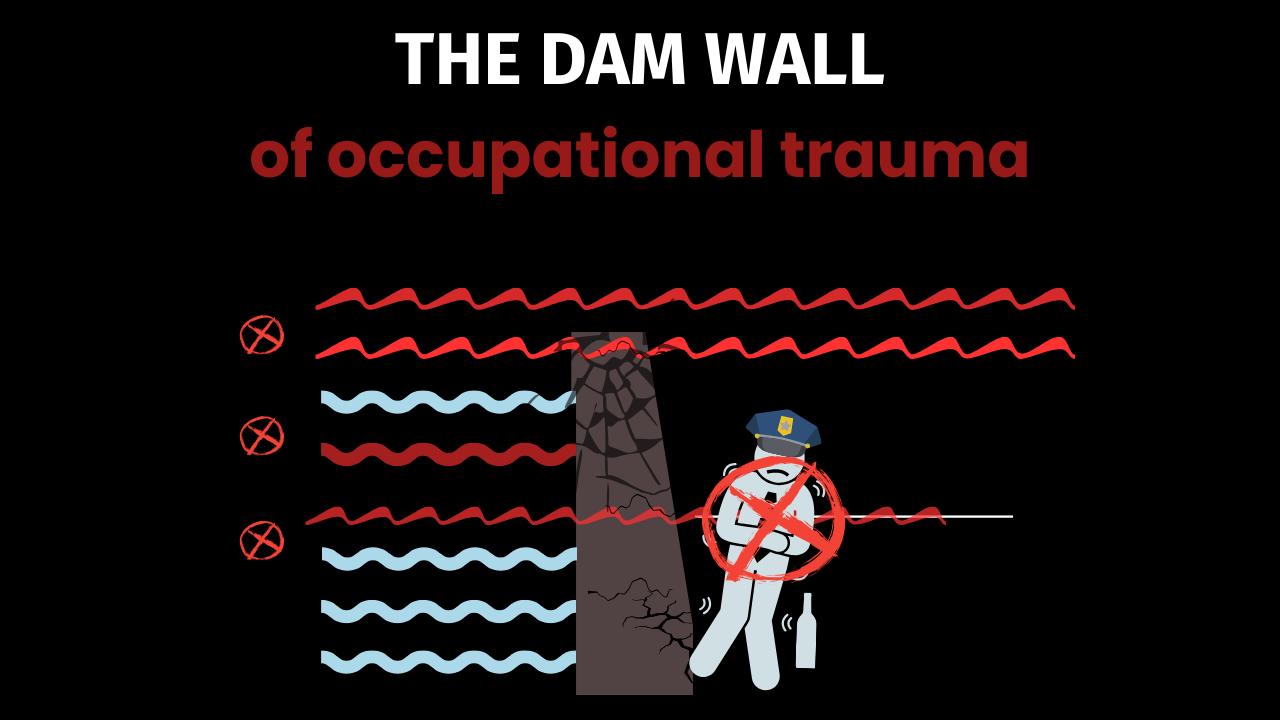
We explain how adverse events accumulate over time and eventually overwhelm us.
Learn More Skills in our Online Course
Our online course offers skills and strategies to overcome panic and anger episodes.
Stages of Treatment in occupational PTSD
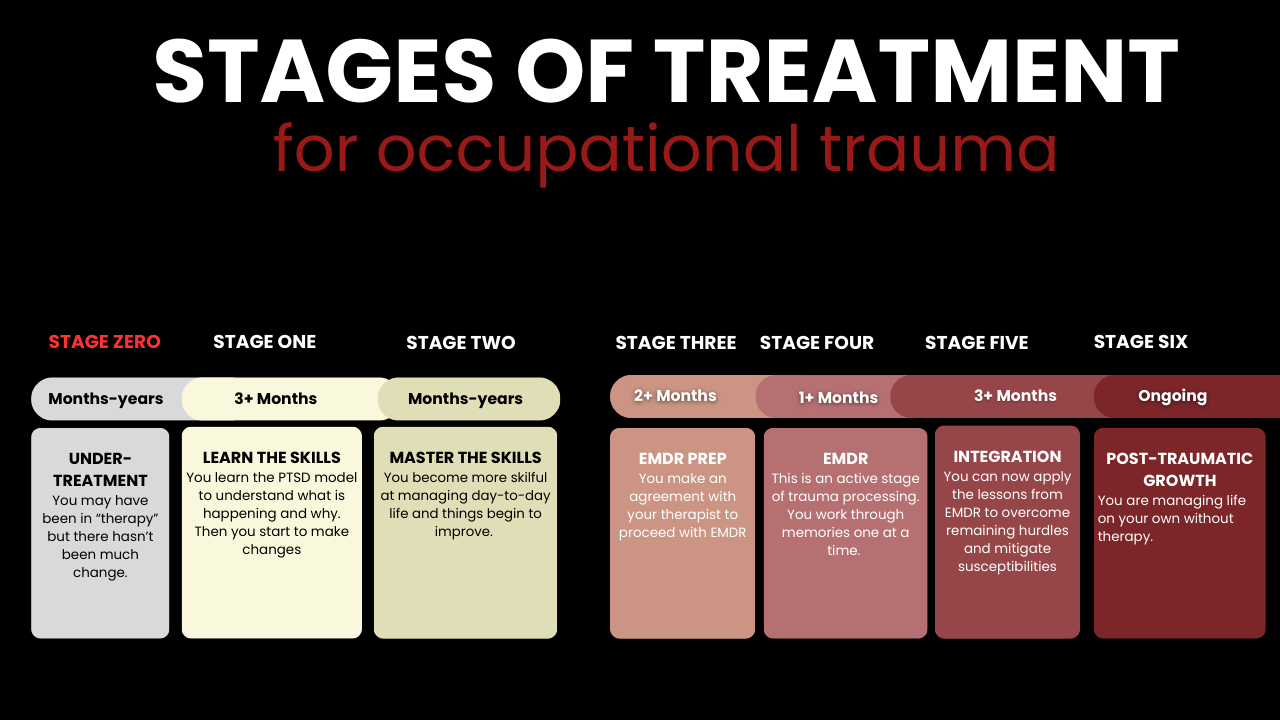
Understand what the stages of treatment are so you can progress to post-traumatic growth