
PTSD Orientation
Start here to learn how and why PTSD develops in frontline workers
Understanding How PTSD Develops in Frontline Workers
Frontline work changes people.
Not because frontline workers are weak, sensitive, or “can’t cope”, but because the human nervous system was never designed to absorb repeated threat, moral injury, helplessness, and responsibility for life-and-death outcomes without consequence.
PTSD does not usually arrive out of nowhere.
It develops over time, through a predictable process, in predictable environments, affecting predictable systems in the brain and body.
This orientation exists to explain that process clearly — so you can understand what is happening, why it is happening, and what actually helps at each stage.
Why frontline workers are uniquely vulnerable
Frontline roles expose people to a combination that is rare in most other professions:
-
Repeated exposure to human suffering, death, and threat
-
High responsibility with limited control
-
Pressure to perform while suppressing emotion
-
Chronic fatigue and sleep disruption from shift work
-
Cultural norms that reward endurance over recovery
For many frontline workers, it is not one incident that causes PTSD.
It is accumulation.
Adverse events vs traumatic events: why this distinction matters
It is important to differentiate between an adverse event and a traumatic event.
Adverse events
An adverse event is stressful, disturbing, or upsetting, but the nervous system is able to process it without becoming overwhelmed. You may feel shaken, tired, angry, or unsettled, but over time, with rest and support, your system recalibrates. Adverse events are part of life and part of frontline work.
You can shake it off.
Traumatic events
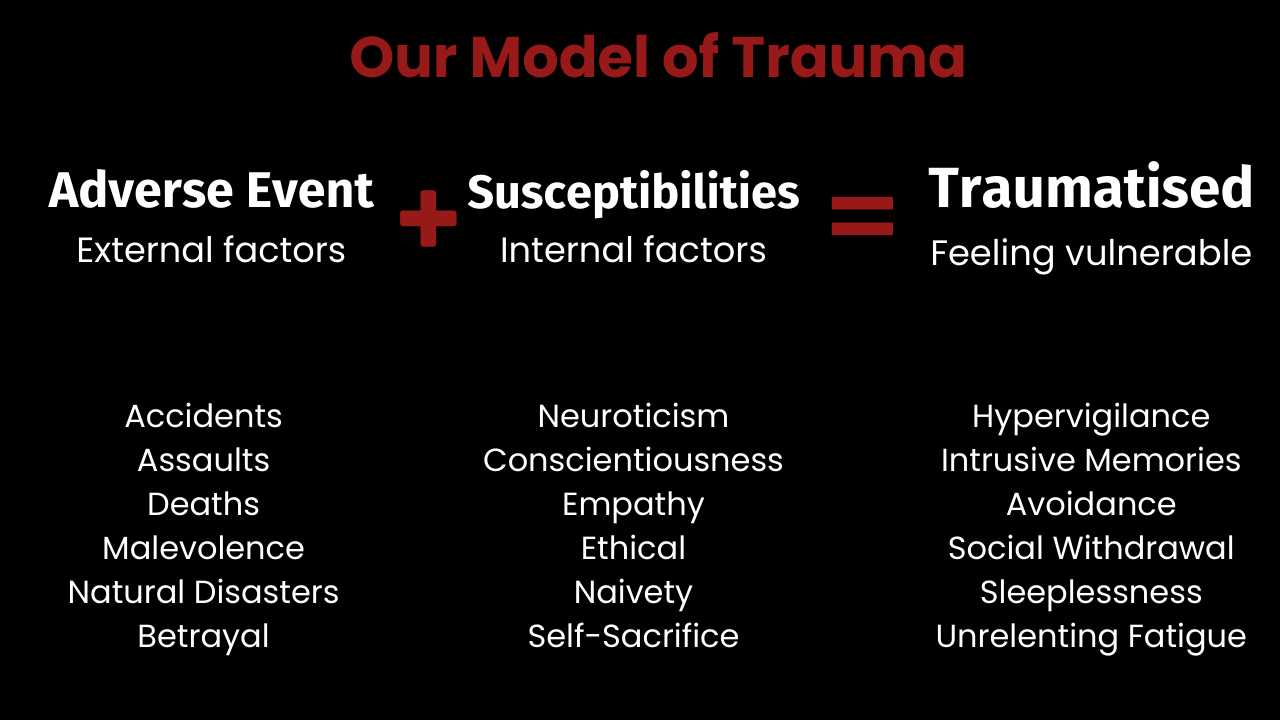
A traumatic event is different. It is an adverse event that aligned with a personal susceptibility which created a meaning that you couldn't process effectively.
A traumatic event overwhelms the nervous system’s capacity to process what is happening. The system does not integrate the experience properly. Instead, it fragments it.
This can happen because:
-
The threat was extreme or inescapable
-
You were powerless to act
-
The event violated core values or moral expectations
-
The event reminded you of a previous experience that had a bad outcome
This is why two people can experience the same incident and have very different outcomes. Trauma is not defined by what happened. It is defined by the interplay between external and internal factors.
PTSD is not just about the event. It is about susceptibility.
Imagine you are wearing an invisible bulletproof vest that has invisible holes in it. You go to a tough job, you take a hit, but the bullet doesn't penetrate the vest. You can walk away.
Then you go to the next rough job. This time the bullet penetrates the vest through an invisible hole you didn't know was there. Now you're injured and you can't shake it off.
Personal susceptibilities can represent a range of internal factors:
- A proclivaty to experience intense emotions
- Self-sacrificing behaviours that compromise our own wellbeing
- Perfectionistic standards that push us to burnout
- Naivety to dark triad personalities
- Being highly agreeable and struggling to say no
- High empathy and associated vicarious trauma
- Strong ethics that lead to moral injury
Your Trauma is Valid
We often hear frontline workers say:
“Others have seen worse.”
“It shouldn’t have affected me.”
“I didn’t even realise it was that bad.”
PTSD is not a referendum on toughness.
PTSD is not your fault.
PTSD is the result of a system that has been pushed beyond its limits, causing great suffering.
To understand how this happens, we use three key models:
-
The Dam Wall metaphor
-
The Susceptibility Model
- The Stages of Treatment
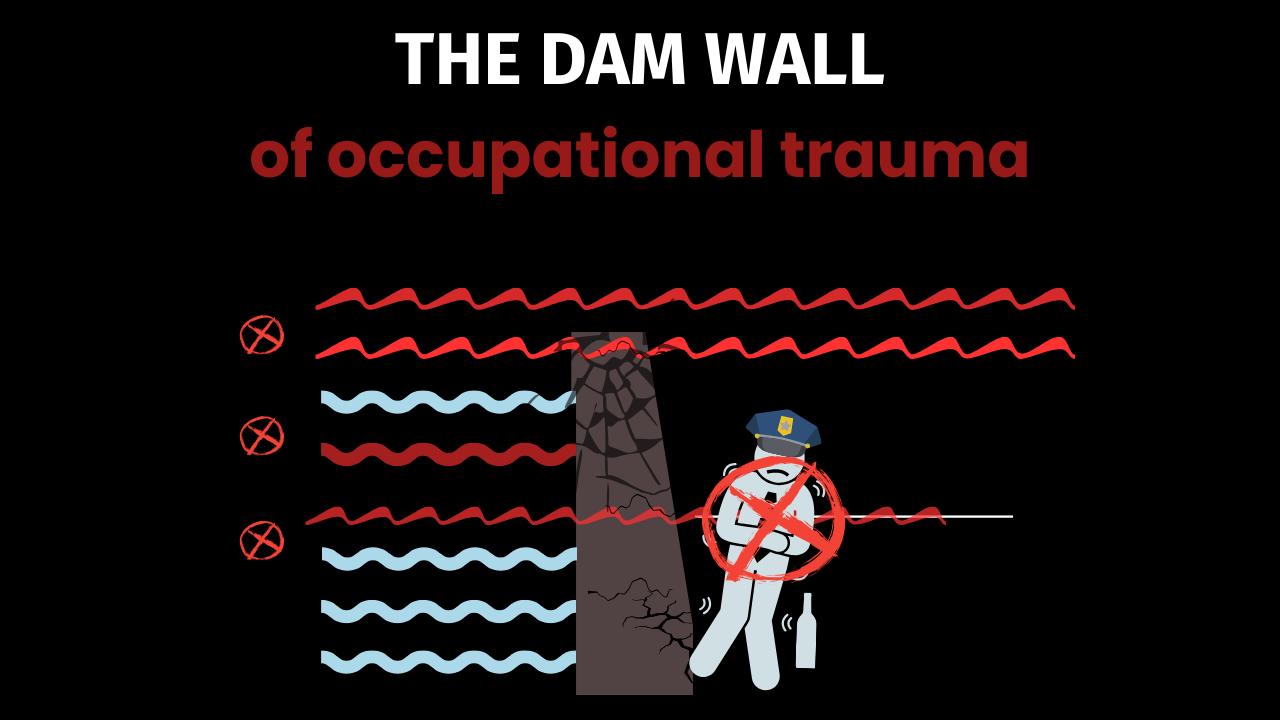
The Dam Wall metaphor of occupational trauma
We explain how adverse events accumulate over time and eventually overwhelm us.
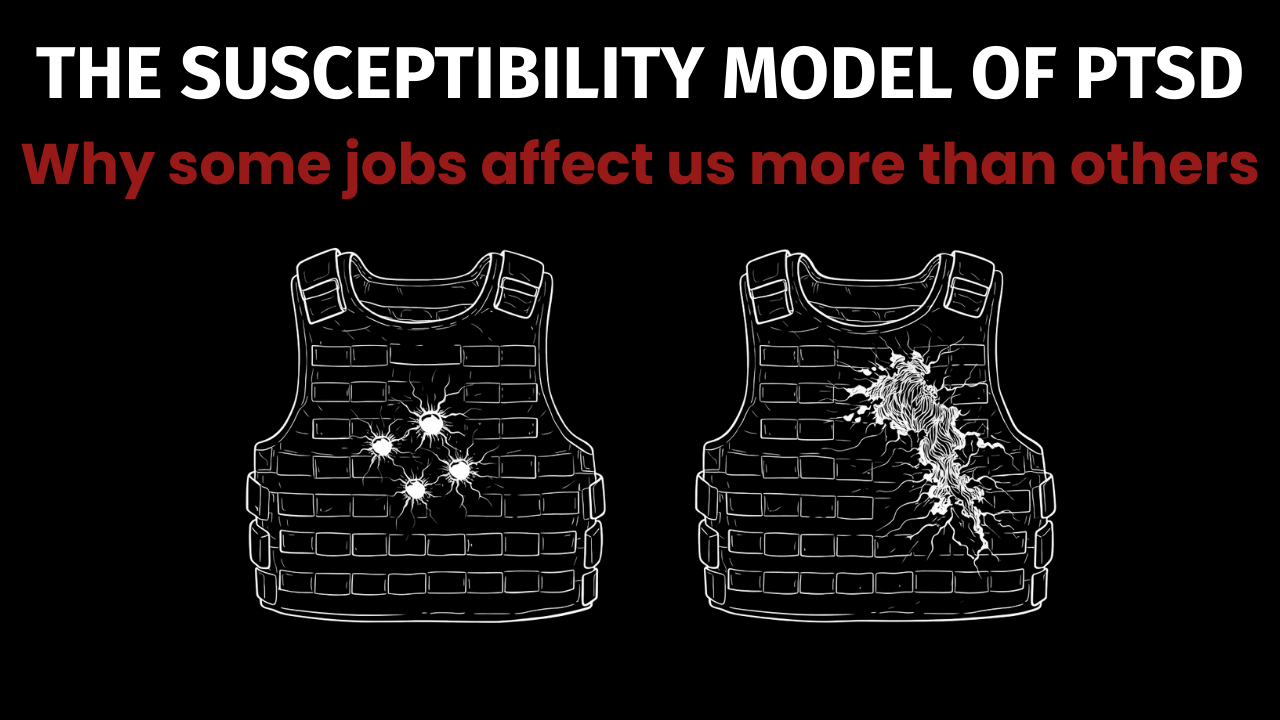
The Susceptibility Model of PTSD
Learn why some jobs affect us more than others
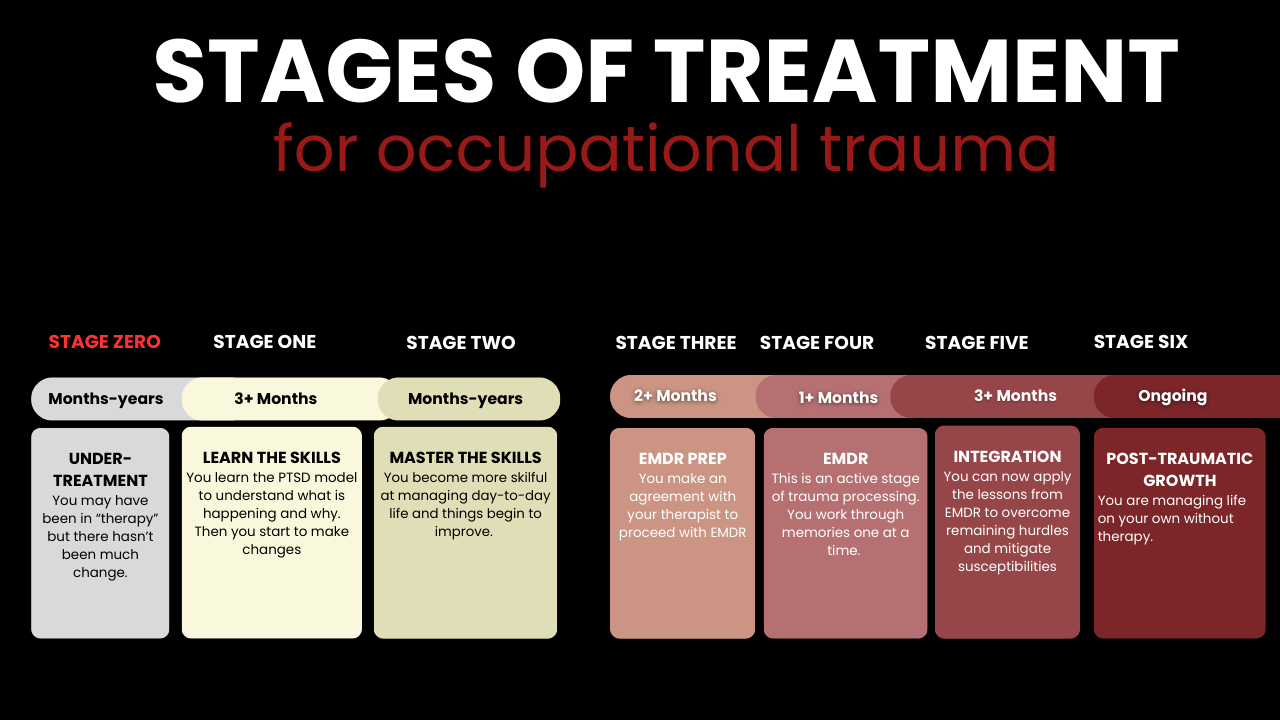
Stages of Treatment in occupational PTSD
Understand what the stages of treatment are so you can progress to post-traumatic growth